
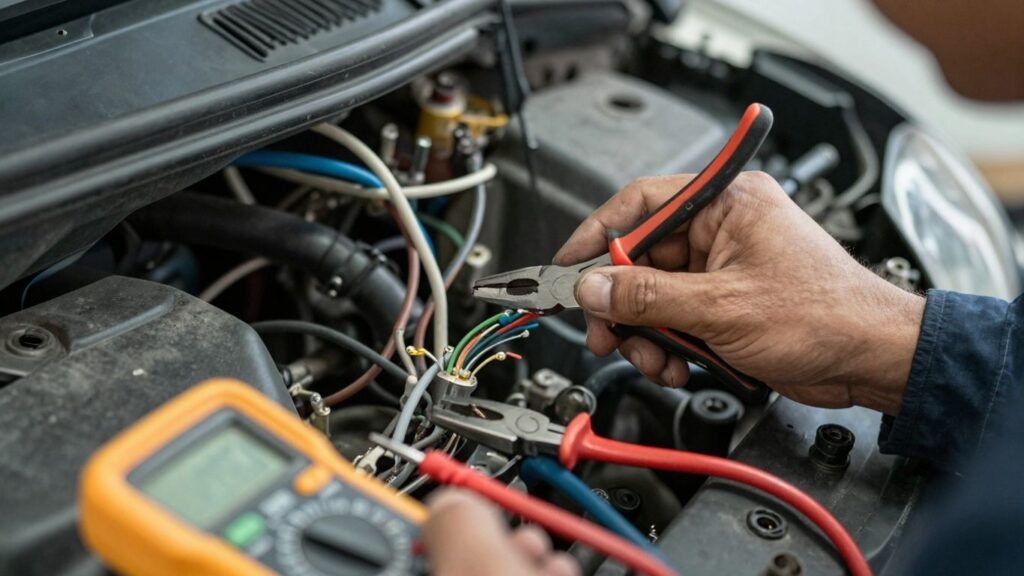
Dealing with electrical problems in your Nissan can feel like a real headache, right? One minute everything’s fine, and the next, your car’s acting up in ways you just don’t understand. It’s easy to get stressed out, especially if you’re not sure where to start. This guide is here to help you figure out what’s going on with your Nissan’s electrical system, covering the common issues and what you can do about them. We’ll break down troubleshooting Nissan electrical issues so you can get back on the road with less worry.
Key Takeaways
- Many Nissan electrical issues start with simple problems like a dead battery or loose connections. Checking these first can save you a lot of time.
- Dashboard warning lights are your car’s way of telling you something’s wrong. Don’t ignore them; they can point you toward the actual problem.
- Wiring and ground connections are often overlooked but are super important for your car’s electrical system to work right. Look for corrosion or damage.
- When basic checks don’t fix the problem, or if multiple things seem to be going wrong at once, it’s usually time to call in a professional.
- Regularly checking your battery, wiring, and other electrical parts can help prevent bigger problems down the road.
Understanding Common Nissan Electrical Issues
Your Nissan, like any modern car, relies heavily on its electrical system to keep everything running. It’s not just about the headlights or the radio; it’s the brain and nervous system that controls how your engine runs, how your safety features work, and pretty much everything else. When this system starts acting up, it can be a real pain, sometimes leaving you stuck on the side of the road. Knowing what to look for is the first step to getting things sorted.
Identifying Symptoms of Electrical Malfunctions
So, how do you know if your Nissan’s electrical system is throwing a fit? Well, there are a few tell-tale signs. You might notice your dashboard lights flickering, or maybe they’re unusually dim. Sometimes, the power windows might move slower than usual, or the radio could cut out unexpectedly. A really common one is when your car just doesn’t want to start, or it cranks really slowly. It’s like the car is just too tired to wake up. These aren’t always major problems, but they’re definitely signals that something’s not quite right under the hood.
The Role of the Battery and Charging System
Think of your battery as the heart of the electrical system. It stores the power needed to start the car and run everything when the engine’s off. If your battery is old or weak, you’ll likely run into starting problems. Then there’s the alternator. Its job is to recharge the battery while you’re driving. If the alternator isn’t doing its job, the battery won’t get topped up, and eventually, you’ll end up with a dead battery. You might see a battery warning light pop up on your dashboard, which is a pretty clear sign that the charging system isn’t working as it should.
Here’s a quick look at what can go wrong:
| Component | Common Symptom |
|---|---|
| Battery | Slow or no crank, dim lights |
| Alternator | Battery warning light, dimming lights, dead battery |
| Starter Motor | Clicking noise when trying to start, no crank |
Recognizing Warning Lights and Dashboard Indicators
Your dashboard is like your car’s personal doctor, constantly giving you updates. Those little lights that pop up aren’t just for decoration. A battery symbol usually means there’s an issue with the charging system. A check engine light can point to a wide range of problems, some electrical, some not. Sometimes, you might see a general electrical system warning light. It’s important not to ignore these. They’re there to give you a heads-up before a small issue turns into a big, expensive one.
Sometimes, a simple fix like a loose battery cable or a blown fuse can be the culprit behind a lot of strange electrical behavior. It’s always worth checking the basics before assuming the worst.
Troubleshooting Nissan Starting Problems
So, your Nissan decided to take an unscheduled nap and won’t fire up? It’s a real pain, especially when you’ve got places to be. But don’t panic just yet. Most of the time, a car that won’t start boils down to a few common culprits. Let’s break them down.
Diagnosing Dead or Weak Batteries
This is probably the most frequent offender. Your battery is like the heart of your car’s electrical system; without enough juice, nothing happens. You might hear a clicking sound when you turn the key, or maybe just silence. Sometimes, the dashboard lights might flicker weakly. A quick way to check is with a multimeter. A healthy battery should read around 12.4 to 12.7 volts when the engine is off. If it’s lower, it’s likely discharged or on its way out. Don’t forget to look at the terminals, too. Corrosion can build up and block the flow of electricity. A simple mix of baking soda and water usually cleans that right up.
| Symptom | Likely Cause |
|---|---|
| Clicking sound | Weak or dead battery |
| No sound, no lights | Dead battery |
| Flickering dashboard lights | Weak battery |
Investigating Starter Motor Failures
If the battery seems okay, but you’re hearing a grinding or a rapid clicking noise when you try to start, the starter motor might be the issue. Think of the starter as the engine’s ignition switch – it’s the part that actually gets the engine spinning to get it going. These things can wear out over time. If your car has been sounding a bit sluggish when you crank it lately, this could be why.
Sometimes, a starter problem isn’t a complete failure but a sign of a worn-out solenoid, which is part of the starter assembly. This can lead to intermittent starting issues where it works sometimes and not others.
Addressing Ignition System Glitches
Beyond the battery and starter, the ignition system is another area to look at. This system is responsible for creating the spark that ignites the fuel. If the ignition switch itself is worn or damaged, it might not be completing the electrical circuit needed to start. Also, check your spark plugs. If they’re old and worn, they won’t create a strong enough spark, leading to starting problems and rough running if the engine does eventually start.
Navigating Wiring and Connection Faults
Sometimes, the electrical gremlins in your Nissan aren’t about a dead battery or a faulty sensor. More often than not, the culprit is hiding in plain sight: the wiring and its connections. Think of your car’s wiring like its nervous system. If any part of that system is damaged or not making good contact, signals can’t get through properly, leading to all sorts of weird electrical behavior.
Inspecting for Corroded Terminals
Corrosion is a major enemy of electrical connections. Over time, especially in humid or salty environments, the metal terminals on your battery, fuse box, and various connectors can develop a fuzzy, greenish-white buildup. This gunk acts like an insulator, blocking the flow of electricity. Cleaning these terminals is often a simple fix that can solve a surprising number of problems. You’ll want to disconnect the battery first (safety first!), then use a wire brush or a dedicated terminal cleaner to scrub away the corrosion. Make sure everything is dry and reconnected tightly.
Identifying Loose or Damaged Wiring
Wiring harnesses run all over your car, carrying power and data. They can get snagged, pinched, or chewed by critters. A visual inspection is your best bet here. Look for any wires that seem frayed, cut, or melted. Pay close attention to areas where the harness flexes, like near the engine or the trunk lid. Sometimes, a wire might just be loose in its connector. Gently tugging on them (again, with the battery disconnected if you’re working near power sources) can reveal a weak connection.
Ensuring Proper Ground Connections
Ground connections are super important. They provide a return path for electricity back to the battery. If a ground wire isn’t making solid contact with the chassis or engine block, it can cause all sorts of odd issues, from flickering lights to components that work intermittently. Look for ground points – usually bolts or screws connecting wires to metal parts of the car. Make sure they are clean, free of rust or paint, and tightened down securely.
A loose or corroded ground can make a perfectly good component seem like it’s failed. It’s like trying to talk on a phone with a bad signal; the message just doesn’t get through clearly, or at all.
| Component | Common Issue | Potential Symptoms |
|---|---|---|
| Battery Terminals | Corrosion, Loose | No crank, dim lights, intermittent power |
| Wiring Harness | Frayed, Broken, Loose | Non-functioning accessories, warning lights, no start |
| Ground Points | Corrosion, Loose | Flickering lights, erratic component behavior |
Diagnosing Electronic Component Failures
Modern Nissans are packed with electronic bits and pieces that make everything work, from your power windows to the engine’s brain. When one of these parts decides to call it quits, it can cause all sorts of weird problems. It’s not always obvious what’s gone wrong, and sometimes it feels like a guessing game.
Understanding Sensor and Module Malfunctions
Sensors are like the eyes and ears of your car, telling the computer what’s happening. Think of the oxygen sensor, the mass airflow sensor, or even the wheel speed sensors. If a sensor starts sending bad information, or no information at all, the car’s computer can get confused. This might show up as a check engine light, rough idling, poor fuel economy, or even stalling. Modules are like mini-computers themselves, controlling specific systems like the anti-lock brakes or the transmission. If a module fails, the whole system it controls can go haywire. Diagnosing these often requires special scan tools that can read trouble codes from the car’s computer.
The Impact of Control Unit Issues
The main control unit, often called the Engine Control Unit (ECU) or Powertrain Control Module (PCM), is the big boss. It takes all the information from the sensors and tells everything else what to do. If the ECU itself has a problem, it can affect a huge range of things. You might see multiple warning lights, the engine might not start, or it could run really poorly. Sometimes, a software glitch within the control unit can cause issues, and a reflash or update might be needed. It’s a complex piece of equipment, and problems here are usually more serious.
When to Suspect Electronic Component Problems
If you’ve checked the basics like the battery, fuses, and wiring, and things still aren’t right, it’s time to look at the electronic parts. Are multiple warning lights on the dashboard illuminated? Is the car behaving erratically in ways that don’t seem related to mechanical issues? For example, if your radio suddenly stops working and the power steering feels off at the same time, it might point to a shared electronic component or module failure. A persistent check engine light that doesn’t go away after basic checks is a strong indicator that a sensor or control unit might be the culprit.
Sometimes, electronic components can fail intermittently. This means the problem might not be there every time you start the car, making it harder to track down. Pay attention to when the issue occurs – is it when the car is hot, cold, or under specific driving conditions? This information can be a big help when trying to figure out what’s wrong.
| Component Type | Common Symptoms | Potential Causes |
|---|---|---|
| Sensors | Check Engine Light, poor performance, rough idle | Failure, contamination, wiring issues |
| Modules | System malfunction (ABS, transmission), warning lights | Internal failure, power supply issues, communication errors |
| Control Units (ECU/PCM) | Multiple warning lights, no-start, erratic behavior | Internal failure, software glitches, power issues |
Addressing Fuel System Electrical Concerns
When your Nissan won’t start or runs rough, the fuel system’s electrical side is often a suspect. It’s not just about having gas in the tank; it’s about getting that gas to the engine reliably. This involves a few key electrical players that can cause headaches if they aren’t working right.
Troubleshooting Fuel Pump Electrical Issues
The fuel pump is what pushes gasoline from your tank to the engine. If its electrical connection is bad, or the pump itself has an electrical fault, you’re going to have problems. You might notice the engine struggling to start, or it might just crank without ever firing up. Sometimes, you can hear the fuel pump hum for a few seconds when you first turn the key to the ‘on’ position (before starting). If you don’t hear that hum, or if it sounds weak, it could be an electrical issue with the pump or its circuit.
Identifying Clogged Fuel Filter Symptoms
While a clogged fuel filter is a mechanical issue, its impact is felt electrically because it restricts the flow of fuel. This restriction can make the fuel pump work harder, potentially leading to electrical strain on the pump over time. If the filter is really blocked, the engine might hesitate under acceleration, or you could experience a general lack of power. It’s like trying to drink through a straw that’s half blocked – you just don’t get enough liquid.
Diagnosing Fuel Injector Problems
Fuel injectors are like tiny spray nozzles that deliver fuel directly into the engine cylinders. Each injector has an electrical solenoid that opens and closes it. If these solenoids fail, or if the wiring to them is damaged, the injector won’t spray fuel. This can cause misfires, rough idling, and poor engine performance. Sometimes, the injectors just get dirty, but a complete electrical failure means they won’t operate at all.
It’s easy to overlook the electrical components of the fuel system. They’re hidden away, and we often think of fuel problems as being purely mechanical. But the pumps, injectors, and the wiring that controls them are all vital. A small electrical glitch here can stop your car dead in its tracks.
Here’s a quick look at what might be happening:
| Symptom | Potential Electrical Cause |
|---|---|
| Engine cranks, won’t start | Fuel pump electrical failure |
| Hesitation or lack of power | Clogged filter (straining pump) |
| Rough idle, misfires | Fuel injector electrical fault |
When to Seek Professional Assistance
Recognizing Complex Electrical Problems
Sometimes, even after you’ve checked the obvious stuff like the battery and fuses, your Nissan might still be acting up. If you’re seeing multiple warning lights flicker on at once, or if the problem seems to pop up and disappear without a clear reason, it’s probably time to call in someone who does this for a living. These kinds of intermittent issues or widespread electrical weirdness can point to deeper problems, like a failing control module or a wiring harness that’s seen better days. Trying to chase these down yourself can get pretty frustrating, and honestly, you might end up making things worse.
The Benefits of Certified Technicians
When you’re stuck, finding a mechanic who really knows Nissans can make a huge difference. Certified technicians have access to special tools and diagnostic equipment that can read your car’s computer codes. They also get specific training on Nissan models, so they’re more likely to know what to look for. It’s not just about fixing the immediate problem; they can often spot potential issues before they become big, expensive headaches. Think of it like going to a specialist doctor instead of a general practitioner when you have a really specific health concern.
Preventing Further Damage Through Expert Repair
Pushing your car too hard when it’s having electrical trouble can cause more damage. For example, a weak electrical signal to the fuel pump might cause the pump to overheat, leading to a complete failure. Or, a short in the wiring could potentially damage sensitive electronic control units. Getting a professional diagnosis early on can save you money in the long run by preventing these secondary failures. If you hear strange noises, smell anything unusual like burning plastic, or if the car is behaving erratically, it’s best to stop driving it and get it checked out by a qualified technician. They can figure out exactly what’s wrong and fix it right the first time.
Preventive Maintenance for Nissan Electrical Systems
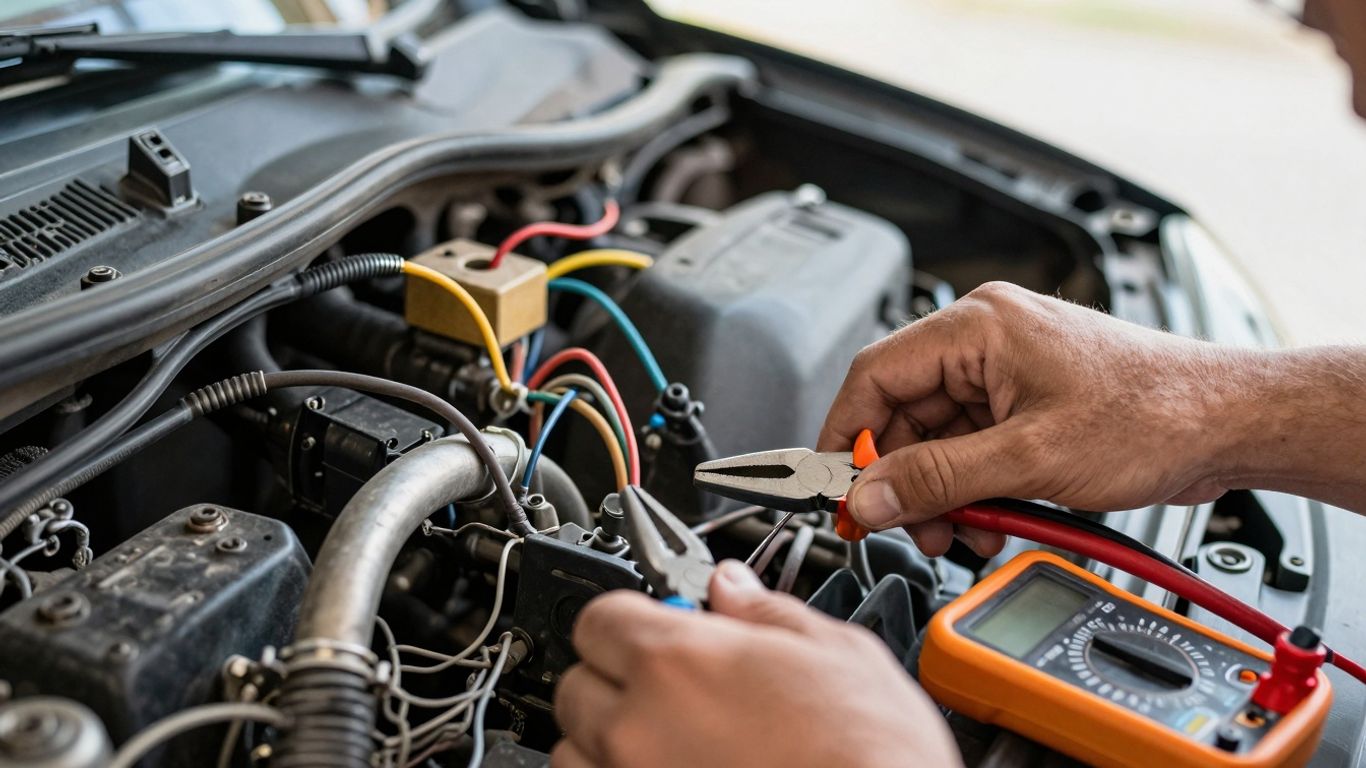
Keeping your Nissan’s electrical system in good shape really comes down to staying on top of a few simple things. It’s not about being a master mechanic; it’s more about being observant and doing regular checks. Think of it like going to the dentist – a little bit of care now can save you a lot of trouble later.
Regular Electrical System Checks
When you pop the hood, take a moment to look around. Are there any wires that look frayed or chewed? Sometimes critters like to make nests and can cause damage. Also, keep an eye out for any unusual smells, like burning plastic. That’s usually a bad sign. It’s also a good idea to test out all your lights – headlights, taillights, turn signals, interior lights – just to make sure they’re all working as they should. A flickering light might not seem like a big deal, but it could be an early warning.
Battery Health Monitoring
Your battery is the heart of the electrical system. You should check the terminals every so often. If you see any white or greenish powdery stuff on them, that’s corrosion. It can really mess with the connection. You can usually clean this off with a wire brush and a bit of baking soda and water paste. Make sure the battery cables are snug, too. A loose connection can cause all sorts of weird electrical gremlins to show up. If your car is sitting for long stretches, the battery can lose its charge, so keep that in mind.
Proactive Wiring Inspections
Wiring is like the nervous system of your car. It’s easy to overlook, but it’s super important. Look for any signs of wear and tear, especially where wires bend or flex. Sometimes, you might find a wire that’s rubbing against a metal part of the car, which can eventually wear through the insulation. If you notice any wires that seem out of place or damaged, it’s best to get them looked at. A small wiring issue now can prevent a much bigger problem down the road.
Taking a little time for these checks can really make a difference. It’s about catching small issues before they turn into major headaches that leave you stranded.
Here’s a quick look at what to keep an eye on:
| Component | What to Check |
|---|---|
| Battery Terminals | Look for corrosion; ensure connections are tight. |
| Wiring Harnesses | Inspect for fraying, damage, or loose connections. |
| Fuses | Check for blown fuses, especially after an issue. |
| Lights | Verify all exterior and interior lights function. |
| Accessories | Test power windows, radio, and other features. |
Wrapping It Up
So, dealing with electrical hiccups in your Nissan can feel like a real headache, right? We’ve gone over some of the more common issues, from a battery that just won’t cooperate to those sneaky wiring problems. Remember, a lot of the time, a simple check of your battery terminals or a blown fuse can solve the problem. But hey, if you’ve tried the basic stuff and your Nissan is still acting up, don’t be afraid to call in the pros. Sometimes, those more complex electrical gremlins need a mechanic’s touch and the right tools. Keeping up with regular maintenance is also a good way to catch things early. Hopefully, this guide gives you a bit more confidence next time your Nissan’s lights flicker or it decides not to start. Happy driving!