
Key Takeaways
Buying a replacement Nissan engine in Mandurah is easier when you confirm compatibility, condition, transport, and installation requirements before paying.
- Match the engine to the vehicle’s exact model, year, engine code, and electronics.
- Ask for mileage, testing details, service history, warranty terms, and return conditions.
- Compare local pickup with delivery based on convenience, transport equipment, and inspection opportunities.
- Budget for related parts, fluids, labour, and possible electronic or cooling-system work.
- Keep invoices and installation records for warranty support and future servicing.
Understanding the used Nissan engine market in Mandurah
The used Nissan engine market in Mandurah includes options for everyday cars, SUVs, and work vehicles. Stock changes frequently because engines become available through vehicle dismantling, trade-ins, and broader parts networks. That means a careful search can uncover a suitable replacement, but the first engine offered is not necessarily the right one. Vehicle details and engine condition should guide the decision.
Common Nissan models and engine types available
Nissan owners may be looking for engines from models such as the Navara, X-Trail, Pathfinder, Qashqai, Patrol, or smaller passenger cars. Petrol and diesel engines can differ significantly even within the same model range, while turbocharged and naturally aspirated versions may use different supporting components. Start with the registration details and engine information rather than relying on the model name alone.
For older vehicles, a used engine can be a practical way to keep a familiar car on the road. For a newer vehicle, matching the precise engine variant matters even more because sensors, control modules, and emissions equipment may vary between production years.
Why drivers choose used engines over new replacements
A used engine can cost less than a new replacement, particularly when the vehicle has some age or its market value does not justify a major new component. It may also provide a faster path to repair if a compatible unit is already available. The saving is only worthwhile when the engine’s condition, compatibility, and warranty are clear.
The full budget should include removal, installation, fluids, seals, filters, transport, and any parts that are sensible to replace while the engine is out. Considering those costs early gives a more realistic comparison than looking at the engine price alone.
How engine availability can vary by model and year
Availability depends on how many vehicles were sold, how common the engine variant is, and whether parts from nearby production years are compatible. Popular models may have more choices, while less common or highly specific engines may require a wider search. Automatic and manual versions can also create different requirements.
Ask the supplier to search by vehicle identification number, engine code, and build date where possible. If a direct match is unavailable, a technically similar engine should only be considered after a qualified technician confirms what changes would be needed.
How to choose the right replacement Nissan engine
Choosing a replacement starts with identification, then moves to condition and practical fitment. A photograph or model name is not enough to confirm that an engine will work in a particular vehicle. Gather the vehicle identification number, engine code, transmission type, build year, and details of the failed unit before requesting prices.
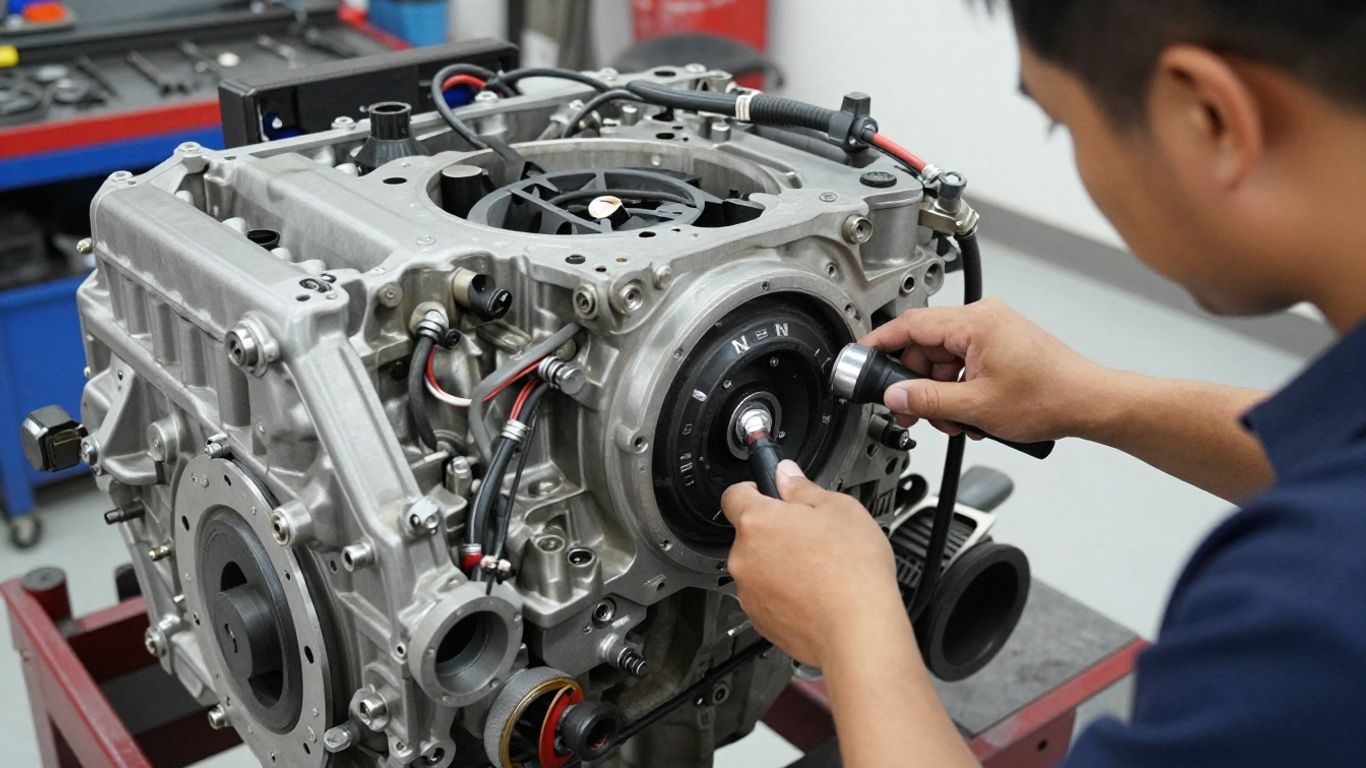
A supplier can then compare available stock against those details, while a workshop can advise on installation requirements. The process is more reliable when compatibility is confirmed in writing before the order is finalised.
Match the engine to your Nissan’s exact specifications
Check the engine code stamped on the engine or recorded in the vehicle documentation. Also compare the build year, fuel type, capacity, aspiration, emissions equipment, and mounting arrangement. Two engines with similar capacity may still need different manifolds, sensors, wiring, or control systems.
Give the supplier the full vehicle details instead of asking only for a “Nissan engine.” This reduces the risk of receiving a unit that looks suitable but creates expensive work during installation.
Check engine codes, mileage, and service history
Mileage can help compare engines, but it should not be treated as the only measure of condition. A unit with clear service information may be a better choice than a lower-mileage engine with an unknown past. Ask how the mileage was recorded and whether the engine came from a running vehicle or a dismantled vehicle.
Useful records may include donor vehicle details, inspection notes, compression results, oil-pressure readings, and evidence of servicing. Clear records reduce uncertainty and make it easier to discuss any concerns before purchase.
Confirm compatibility with transmissions and electronics
The engine must work with the vehicle’s transmission, wiring, sensors, immobiliser, and control modules. Some installations require transferring external components from the original engine, while others may involve programming or diagnostic work. A mechanic should identify these requirements before the replacement arrives.
It is also worth checking whether the supplied unit includes accessories such as the alternator, starter motor, air-conditioning compressor, intake components, or fuel system parts. An engine supplied without those items may still be suitable, but the quote should make the difference clear.
Consider reconditioned and tested engine options
A tested used engine and a reconditioned engine are not necessarily the same thing. Ask what work has actually been completed, which components were measured or replaced, and whether the unit was run or inspected before sale. Avoid relying on broad labels without a description of the process.
The right option depends on the vehicle, budget, urgency, and intended service life. A workshop can help compare a tested used unit with a reconditioned alternative once labour and related parts are included.
What to inspect before buying a used Nissan engine
Inspection helps separate a promising replacement from an engine that may create another repair bill. Even when the engine cannot be opened, there are useful clues in its external condition, recorded tests, and history. Take time to ask questions before arranging payment or transport.
A careful inspection is especially valuable when the engine is being collected locally. For delivery purchases, request photographs, reports, and written confirmation of what is covered before the unit leaves the supplier.
Look for signs of overheating or internal damage
Check for damaged wiring, cracked housings, coolant staining, heavy corrosion, broken mounts, and signs that the engine has been exposed to excessive heat. Discoloured oil or residue around the cooling system may warrant further investigation. External cleanliness alone does not prove internal health.
Ask whether the donor vehicle was running before dismantling and why it was removed from service. If the original vehicle suffered a serious collision, confirm that the engine itself was not affected by impact damage.
Review compression tests and inspection reports
Compression testing can provide useful information about cylinder condition, although the result should be considered alongside leak-down testing, oil pressure, and visual inspection where available. Ask for the figures, not just a statement that the engine was tested. The testing method and date can also help put the information in context.
Reports should identify the engine or donor vehicle clearly so there is no confusion between multiple units. If the supplier cannot provide a particular test, ask what inspection was completed instead and whether a workshop can perform additional checks before installation.
Check oil condition, seals, and external components
Inspect the oil for unusual sludge, metallic particles, or signs of coolant contamination. Look around the crankshaft, camshaft, sump, rocker cover, and front cover for leaks or damaged seals. Ancillary components should be checked too, because a replacement engine may be sold as a long block rather than a complete assembly.
A written list of included and excluded components prevents misunderstandings. It also helps the installer prepare the correct gaskets, belts, hoses, filters, and fluids before the vehicle is dismantled.
Ask about warranty coverage and return conditions
Warranty terms should explain the coverage period, what parts are included, and what installation requirements apply. Some conditions may require professional installation, evidence of correct fluids, or prompt reporting of a fault. Ask who pays for diagnosis, freight, labour, and removal if a problem occurs.
Return conditions matter as well. Find out whether an unwanted but compatible engine can be returned, whether a core must be supplied, and what happens if the engine is found to be unsuitable after inspection.
Buying used Nissan engines in Mandurah
Buying locally can make communication and collection simpler, but the same technical checks still apply. A nearby supplier may be easier to contact when you need photographs, clarification, or an inspection appointment. The best purchase is the one with clear fitment and fair terms, not necessarily the one with the lowest advertised price.
When comparing options, request an itemised quote. This should distinguish the engine itself from delivery, accessories, warranty conditions, and any installation support.
Benefits of sourcing from a local supplier
A local supplier may allow you to discuss the vehicle in person, inspect the engine, and arrange pickup without waiting for freight. It can also be easier to coordinate with a Mandurah workshop if questions arise during installation. Those practical advantages are useful when a vehicle is off the road.
Local sourcing does not remove the need for research. Confirm that the supplier can identify the engine, explain its condition, and provide terms that match the proposed purchase.
Questions to ask before placing an order
Ask for the engine code, mileage, donor details, testing completed, included components, warranty period, and estimated availability. Confirm whether the quoted price includes GST, loading, delivery, or a refundable core charge. If your vehicle has modifications, mention them before compatibility is assessed.
It is sensible to keep the answers in an email or written quote. A clear record helps if the engine specification changes, collection arrangements move, or a warranty question arises later.
Comparing prices, warranties, and included components
Price comparisons are meaningful only when the engines are being offered on similar terms. A cheaper long block may require accessories and sensors that are included with a more complete unit. Warranty length also matters less if the conditions are unclear or diagnosis and freight are excluded.
| Comparison point | Why it matters |
|---|---|
| Engine specification | Confirms the unit matches the vehicle |
| Mileage and testing | Provides context about condition |
| Included components | Shows what may need to be transferred or bought |
| Warranty and returns | Sets expectations if a fault or mismatch appears |
Reviewing these points together gives a fairer picture of value. It may also reveal that a slightly higher-priced engine is less expensive once missing parts and transport are included.
When professional installation is the safer choice
Engine replacement involves lifting equipment, fuel and coolant systems, electrical connections, fluids, and post-installation testing. A workshop has the equipment and diagnostic tools to manage those tasks safely. Professional installation may also be required by the warranty terms.
Ask the installer for a written scope that covers removal, transfer of components, replacement fluids, programming, testing, and disposal. This makes the final cost easier to compare and reduces surprises once work begins.
Local pickup options in Mandurah
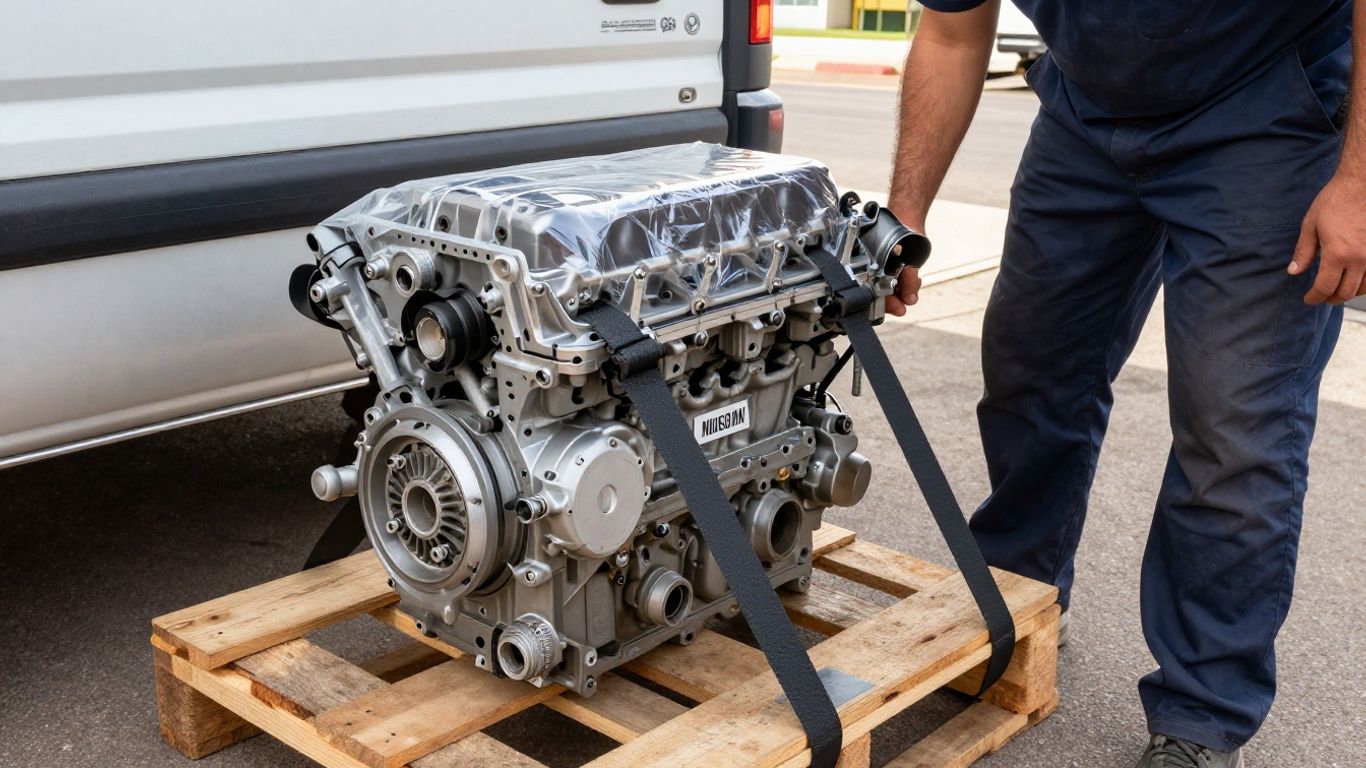
Local pickup can suit buyers who have suitable transport and want to inspect the engine before taking it away. It requires more planning than collecting a small part because engines are heavy, awkward to handle, and often secured on a pallet. Confirm the arrangements before travelling.
The supplier should tell you whether loading equipment is available and whether the engine will be prepared for transport. Your vehicle and lifting method must be suitable for the weight and dimensions of the package.
How to prepare for collecting an engine
Bring the order confirmation, vehicle details, and any required core engine information. Use a suitable trailer, ute, or freight vehicle with enough load capacity and tie-down points. Do not rely on hand loading or improvised lifting equipment.
Protect the engine from movement, rain, and contact with other cargo. A stable pallet and properly rated restraints are safer than placing the unit loose in a tray.
Confirming stock, collection times, and loading requirements
Call ahead to confirm that the exact engine is still available and ready for collection. Ask about opening hours, identification requirements, loading appointments, pallet dimensions, and whether a forklift or tail lift is needed. Stock can change, so an earlier conversation is not always enough.
If a workshop or transport company is collecting on your behalf, provide the order details and confirm who is responsible for checking the package before departure.
Inspecting the engine before taking it home
Compare the engine code and visible identifying marks with the paperwork. Look for fresh damage, cracked housings, loose parts, leaking fluids, and missing accessories that were included in the quote. Photograph the engine and pallet before loading if the supplier permits it.
Raise discrepancies immediately rather than taking the engine away and trying to resolve them later. A short inspection at collection can prevent a much longer dispute.
Arranging transport for larger engines and parts
For heavier engines or multiple parts, a freight service with appropriate lifting equipment may be safer than a private vehicle. Provide accurate dimensions, weight, pickup details, and delivery access information. Narrow driveways, steep access, and workshop loading areas can affect the delivery method.
Ask whether the engine will travel on a pallet and whether the carrier offers tracking or transit protection. These details help you plan for someone to receive the shipment.
Nissan engine delivery across Mandurah and nearby areas
Delivery is convenient when the vehicle is immobile or the supplier is not close enough for collection. It also adds handling stages, so packaging and access need to be discussed before dispatch. A workshop address may be easier than a residential address if lifting equipment is required.
Give the carrier accurate contact details and explain any access restrictions. A missed delivery can delay installation and may create additional handling charges.
Delivery options for residential and workshop addresses
Confirm whether delivery is kerbside, to a loading bay, or to a specified position on the property. Residential streets may have restrictions for larger freight vehicles, while workshops may have forklifts or hoists available. Ask whether an appointment is needed.
The receiver should have a clear plan for unloading. An engine should not be left unattended where it can be damaged, stolen, or exposed to weather.
How engine packaging protects parts during transport
A suitable pallet, secure restraints, protective wrapping, and plugs for open ports help reduce movement and contamination. External accessories should be secured so they cannot strike the block or other components. Packaging should also allow the receiver to inspect the shipment without unnecessarily unpacking it.
Do not assume that a wrapped engine is protected from every risk. Check the package for impact marks, crushed corners, fluid leaks, and loose components before signing for delivery.
Delivery timeframes and tracking considerations
Delivery estimates can depend on stock readiness, carrier schedules, distance, weekends, and the size of the shipment. Request a dispatch confirmation and tracking reference when available. If the engine is needed for a booked installation, allow room for delays rather than scheduling the workshop too tightly.
Track the shipment and make sure someone is available to receive it. Prompt collection from a depot may be required if the carrier cannot access the delivery address.
What to do if the engine arrives damaged
Photograph the packaging and engine before moving or cleaning anything. Note visible damage on the delivery paperwork and contact the supplier and carrier promptly. Keep the packaging until the claim process is complete, as it may help establish how the damage occurred.
Do not install a unit with cracked housings, bent fittings, or signs of impact until the supplier has assessed it. Written communication and dated photographs provide a clearer record than a phone call alone.
Planning the replacement and installation process
A replacement engine is only one part of the repair. The vehicle must be prepared, related components assessed, and the finished installation tested before normal driving resumes. Planning these stages together helps control downtime and prevents avoidable repeat work.
Discuss the intended engine with the installer before ordering if the original failure involved overheating, oil pressure, contamination, or a broken timing component. The cause of failure may affect what else needs attention.
Removing the failed engine and preparing the vehicle
The workshop should document the vehicle’s condition before removal and identify components that can be reused safely. Fluids, battery connections, fuel lines, wiring, cooling hoses, exhaust connections, and transmission interfaces all need careful handling. The failed engine should be inspected where useful, particularly if its failure could have affected other systems.
Cleaning mounting points and checking the engine bay can make installation smoother. It is also a good time to look for damaged brackets, corroded connectors, worn hoses, or leaks that were hidden by the original engine.
Replacing related parts during installation
Belts, seals, filters, spark plugs or glow plugs, fluids, hoses, and accessible gaskets may be sensible replacements depending on their condition. Components that are difficult to reach once the engine is installed deserve particular attention. The correct list depends on the engine and the installer’s inspection.
Replacing every part automatically is not necessary, but reusing worn components can undermine the value of the replacement. Ask for a reason and price for each recommended item.
Testing and running in the replacement engine
After installation, the workshop should check fluid levels, leaks, electrical connections, warning lights, cooling-system operation, and diagnostic codes. Initial starting and warm-up should be monitored rather than treated as the end of the repair. A road test can help confirm normal operation under controlled conditions.
Follow the installer’s guidance for early driving, oil checks, and servicing. Stop driving and report unusual noises, smoke, overheating, warning lights, or fluid loss promptly.
Keeping records for warranty and future servicing
Keep the invoice, engine identification details, test reports, warranty terms, transport documents, and installation invoice together. Record the installation date, odometer reading, fluids used, and any transferred components. These details help with future servicing and make a warranty discussion more straightforward.
A complete file also benefits the next owner if the vehicle is sold. It shows what was replaced, when the work occurred, and how the engine was maintained afterwards.
Conclusion
Finding Used Nissan engines Mandurah – local pickup or delivery is a practical process when compatibility, condition, transport, warranty terms, and installation are considered together. Confirm the engine details before ordering, inspect or document the unit carefully, and involve a qualified workshop where the replacement requires specialist equipment or electronic setup. A little preparation can turn a difficult breakdown into a clearer, more manageable repair.